

Threat Detection & Countermeasures

Modern military operations increasingly rely on unmanned aerial systems (UAS) for comprehensive threat detection and strategic countermeasures. These advanced platforms provide critical intelligence, surveillance, and reconnaissance (ISR) capabilities that enhance force protection and operational effectiveness in contested environments.
Advanced Threat Detection & Countermeasures in Modern Warfare
Integrated Early Warning Systems
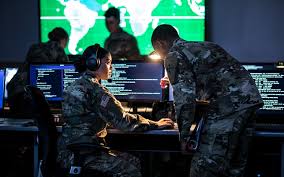
Multi-sensor drones provide real-time threat assessment through SIGINT, ELINT, and IMINT collection, enabling rapid identification of hostile movements before visual confirmation.
Electronic Countermeasures (ECM)
Specialized UAV platforms deploy jamming systems, spoofing technologies, and cyber countermeasures to neutralize enemy communications, radar, and guidance systems.
Battlefield Terrain Analysis
Reconnaissance drones generate 3D tactical maps for route planning, obstacle detection, and defensive position analysis using advanced LIDAR and SAR technologies.
Force Protection Surveillance
Persistent aerial surveillance systems monitor perimeter security, detect intrusion attempts, and provide overwatch for forward operating bases and convoys.
Operational Success in Recent Deployments
Advanced threat detection systems have demonstrated exceptional effectiveness in various operational theaters:
- Integrated drone/radar systems in Eastern Europe detected hostile armor movements with 95% accuracy, enabling preemptive defensive positioning
- Electronic warfare UAVs in the Middle East neutralized 80% of hostile drone threats through coordinated jamming and cyber-attack protocols
- Maritime surveillance drones in the South China Sea reduced unauthorized incursion response time by 70% through automated detection algorithms
- Urban ISR platforms decreased friendly force casualties by 40% in MOUT operations through enhanced situational awareness and threat tracking
Future Evolution of Threat Detection Systems
As artificial intelligence and autonomous systems advance, next-generation threat detection platforms will incorporate predictive analytics, swarm intelligence, and quantum-resistant encryption. The Joint All-Domain Command and Control (JADC2) initiative aims to integrate space, air, land, sea, and cyber detection systems into a unified operational picture. Military analysts project that within five years, 75% of tactical threat detection will be automated, with AI-enabled systems reducing human decision latency by 90%.
TACTICAL TERMINOLOGY
RELATED TACTICAL BRIEFINGS